اگر آپ کو فون پر رابطہ کرنے کے دوران مسئلہ درپیش ہے تو براہ کرم 03484122281 پر واٹس ایپ پر رابطہ کریں۔ ملک میں غیر یقینی صورتحال کی وجہ سے قیمتیں حتمی نہیں ہیں۔ لہذا براہ کرم پرسکون رہیں۔

My Cart

Loading...

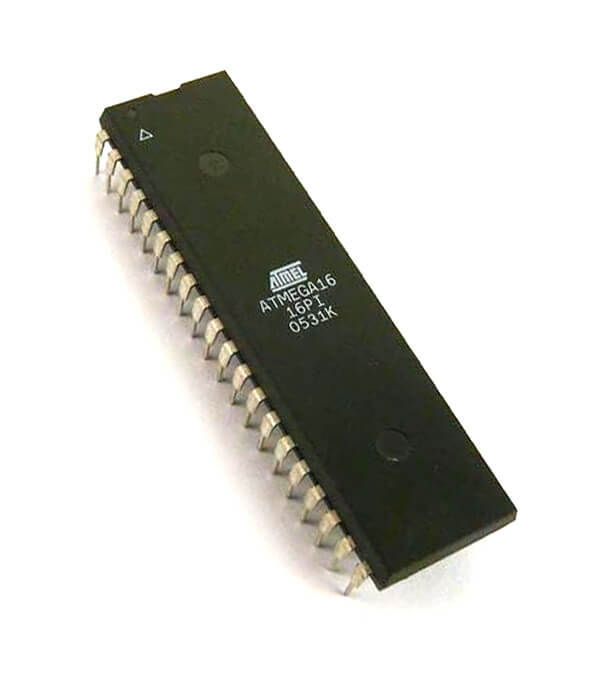
ATmega16 Microcontroller – Atmel AVR 8-Bit MCU In Pakistan

The ATmega16 is an 8-bit AVR microcontroller with 16KB Flash, 1KB SRAM, and 512B EEPROM for versatile embedded applications.
🔥
HURRY! ONLY -- ITEMS LEFT!

Description:

he ATmega16 is a low-power, 8-bit microcontroller from the Atmel AVR family, based on an enhanced Reduced Instruction Set Computing (RISC) architecture. It is a versatile and popular choice for a wide range of embedded systems due to its robust features, low power consumption, and high performance.

Key features and specifications:

  • CPU: The ATmega16’s 8-bit AVR RISC processor can execute up to 16 million instructions per second (MIPS) at its maximum clock speed of 16 MHz. It has 32 general-purpose working registers that allow for fast, single-cycle access for efficient code execution.
  • Memory: It is equipped with multiple types of memory:
    • Flash: 16 KB of in-system self-programmable Flash memory for storing the program code, with an endurance of 10,000 write/erase cycles.
    • SRAM: 1 KB of internal Static RAM for temporary data storage.
    • EEPROM: 512 bytes of Electrically Erasable Programmable Read-Only Memory for long-term data storage, with an endurance of 100,000 write/erase cycles.
  • I/O and interfaces:
    • I/O lines: 32 programmable input/output (I/O) lines, organized into four 8-bit ports (PORTA, PORTB, PORTC, and PORTD).
    • Analog-to-Digital Converter (ADC): An 8-channel, 10-bit ADC for converting analog signals from sensors and other external devices into a digital format the microcontroller can process.
    • Timers/Counters: Two 8-bit timers/counters and one 16-bit timer/counter, which can be used for timing, counting events, and generating PWM signals.
    • PWM Channels: Four channels for Pulse Width Modulation, used for controlling motor speed, brightness of LEDs, and other analog outputs.
    • Serial Communication: Supports standard communication protocols including Universal Synchronous/Asynchronous Receiver/Transmitter (USART), Serial Peripheral Interface (SPI), and a byte-oriented Two-wire Serial Interface (TWI, or I2C).
    • JTAG Interface: An interface for boundary-scan testing and on-chip debugging.
  • Power management: The ATmega16 features multiple software-selectable sleep modes (Idle, ADC Noise Reduction, Power-save, Power-down, Standby, and Extended Standby) to minimize power consumption.
  • Watchdog timer: A programmable watchdog timer with its own on-chip oscillator can reset the microcontroller in case of a program malfunction. 

Common applications:

The ATmega16’s versatility and cost-effectiveness make it a popular choice for a wide range of applications, especially in embedded systems. Some common uses include: 
  • Robotics and automation
  • Home automation systems and appliances
  • Motor control systems
  • Temperature and pressure control devices
  • Analog signal measurement and manipulation
  • Industrial automation
  • Security systems

Reviews

There are no reviews yet.

Be the first to review “ATmega16 Microcontroller – Atmel AVR 8-Bit MCU In Pakistan”

Your email address will not be published. Required fields are marked *

The ATmega16 is an 8-bit AVR microcontroller with 16KB Flash, 1KB SRAM, and 512B EEPROM for versatile embedded applications.

Description:

he ATmega16 is a low-power, 8-bit microcontroller from the Atmel AVR family, based on an enhanced Reduced Instruction Set Computing (RISC) architecture. It is a versatile and popular choice for a wide range of embedded systems due to its robust features, low power consumption, and high performance.

Key features and specifications:

  • CPU: The ATmega16's 8-bit AVR RISC processor can execute up to 16 million instructions per second (MIPS) at its maximum clock speed of 16 MHz. It has 32 general-purpose working registers that allow for fast, single-cycle access for efficient code execution.
  • Memory: It is equipped with multiple types of memory:
    • Flash: 16 KB of in-system self-programmable Flash memory for storing the program code, with an endurance of 10,000 write/erase cycles.
    • SRAM: 1 KB of internal Static RAM for temporary data storage.
    • EEPROM: 512 bytes of Electrically Erasable Programmable Read-Only Memory for long-term data storage, with an endurance of 100,000 write/erase cycles.
  • I/O and interfaces:
    • I/O lines: 32 programmable input/output (I/O) lines, organized into four 8-bit ports (PORTA, PORTB, PORTC, and PORTD).
    • Analog-to-Digital Converter (ADC): An 8-channel, 10-bit ADC for converting analog signals from sensors and other external devices into a digital format the microcontroller can process.
    • Timers/Counters: Two 8-bit timers/counters and one 16-bit timer/counter, which can be used for timing, counting events, and generating PWM signals.
    • PWM Channels: Four channels for Pulse Width Modulation, used for controlling motor speed, brightness of LEDs, and other analog outputs.
    • Serial Communication: Supports standard communication protocols including Universal Synchronous/Asynchronous Receiver/Transmitter (USART), Serial Peripheral Interface (SPI), and a byte-oriented Two-wire Serial Interface (TWI, or I2C).
    • JTAG Interface: An interface for boundary-scan testing and on-chip debugging.
  • Power management: The ATmega16 features multiple software-selectable sleep modes (Idle, ADC Noise Reduction, Power-save, Power-down, Standby, and Extended Standby) to minimize power consumption.
  • Watchdog timer: A programmable watchdog timer with its own on-chip oscillator can reset the microcontroller in case of a program malfunction. 

Common applications:

The ATmega16's versatility and cost-effectiveness make it a popular choice for a wide range of applications, especially in embedded systems. Some common uses include: 
  • Robotics and automation
  • Home automation systems and appliances
  • Motor control systems
  • Temperature and pressure control devices
  • Analog signal measurement and manipulation
  • Industrial automation
  • Security systems
Loading...

Description:

he ATmega16 is a low-power, 8-bit microcontroller from the Atmel AVR family, based on an enhanced Reduced Instruction Set Computing (RISC) architecture. It is a versatile and popular choice for a wide range of embedded systems due to its robust features, low power consumption, and high performance.

Key features and specifications:

  • CPU: The ATmega16’s 8-bit AVR RISC processor can execute up to 16 million instructions per second (MIPS) at its maximum clock speed of 16 MHz. It has 32 general-purpose working registers that allow for fast, single-cycle access for efficient code execution.
  • Memory: It is equipped with multiple types of memory:
    • Flash: 16 KB of in-system self-programmable Flash memory for storing the program code, with an endurance of 10,000 write/erase cycles.
    • SRAM: 1 KB of internal Static RAM for temporary data storage.
    • EEPROM: 512 bytes of Electrically Erasable Programmable Read-Only Memory for long-term data storage, with an endurance of 100,000 write/erase cycles.
  • I/O and interfaces:
    • I/O lines: 32 programmable input/output (I/O) lines, organized into four 8-bit ports (PORTA, PORTB, PORTC, and PORTD).
    • Analog-to-Digital Converter (ADC): An 8-channel, 10-bit ADC for converting analog signals from sensors and other external devices into a digital format the microcontroller can process.
    • Timers/Counters: Two 8-bit timers/counters and one 16-bit timer/counter, which can be used for timing, counting events, and generating PWM signals.
    • PWM Channels: Four channels for Pulse Width Modulation, used for controlling motor speed, brightness of LEDs, and other analog outputs.
    • Serial Communication: Supports standard communication protocols including Universal Synchronous/Asynchronous Receiver/Transmitter (USART), Serial Peripheral Interface (SPI), and a byte-oriented Two-wire Serial Interface (TWI, or I2C).
    • JTAG Interface: An interface for boundary-scan testing and on-chip debugging.
  • Power management: The ATmega16 features multiple software-selectable sleep modes (Idle, ADC Noise Reduction, Power-save, Power-down, Standby, and Extended Standby) to minimize power consumption.
  • Watchdog timer: A programmable watchdog timer with its own on-chip oscillator can reset the microcontroller in case of a program malfunction. 

Common applications:

The ATmega16’s versatility and cost-effectiveness make it a popular choice for a wide range of applications, especially in embedded systems. Some common uses include: 
  • Robotics and automation
  • Home automation systems and appliances
  • Motor control systems
  • Temperature and pressure control devices
  • Analog signal measurement and manipulation
  • Industrial automation
  • Security systems

Reviews

There are no reviews yet.

Be the first to review “ATmega16 Microcontroller – Atmel AVR 8-Bit MCU In Pakistan”

Your email address will not be published. Required fields are marked *

Scroll to Top